Public-source monitor · first edition
Global Dating Safety Rules & Response Map 2026
What can a dating user report? Must the platform answer? Is there an appeal? This map separates binding rules, an industry code, official advice, and proposals across seven jurisdictions—then shows what twelve dating products tell users publicly.
The short answer
A report button, a legal right, and a safety promise are not the same thing.
The EU gives users a formal notice-and-action outcome and appeal route for covered platform decisions. The UK places risk, complaints, and age-assurance duties on in-scope services. Australia has a dating-specific voluntary code alongside eSafety powers. The United States has active consumer enforcement and intimate-image law, while a dating-specific banned-account notification measure remains a bill. Other reviewed countries rely on broader intermediary, privacy, consumer, or digital-violence frameworks.
Use this map to find the right source and question. Do not use it as legal advice, a country safety ranking, proof that a product complies, or a verdict about a person.
Read the legal force first
Five labels prevent a common reporting error.
A law, statutory duty, or enforceable regulatory requirement in the reviewed source.
A dating-specific industry code with its own oversight, but not the same legal force as legislation.
Advice or a reporting route from a government, regulator, or public authority.
A bill, consultation, or implementation step that should not be described as current law.
No dating-specific requirement was located in the reviewed official source set. This is not proof that no relevant law exists.
What the 63 coded cells contain
Framework type, not a safety score
Each cell records the strongest status supported by the linked official source. Counts describe this source set only.
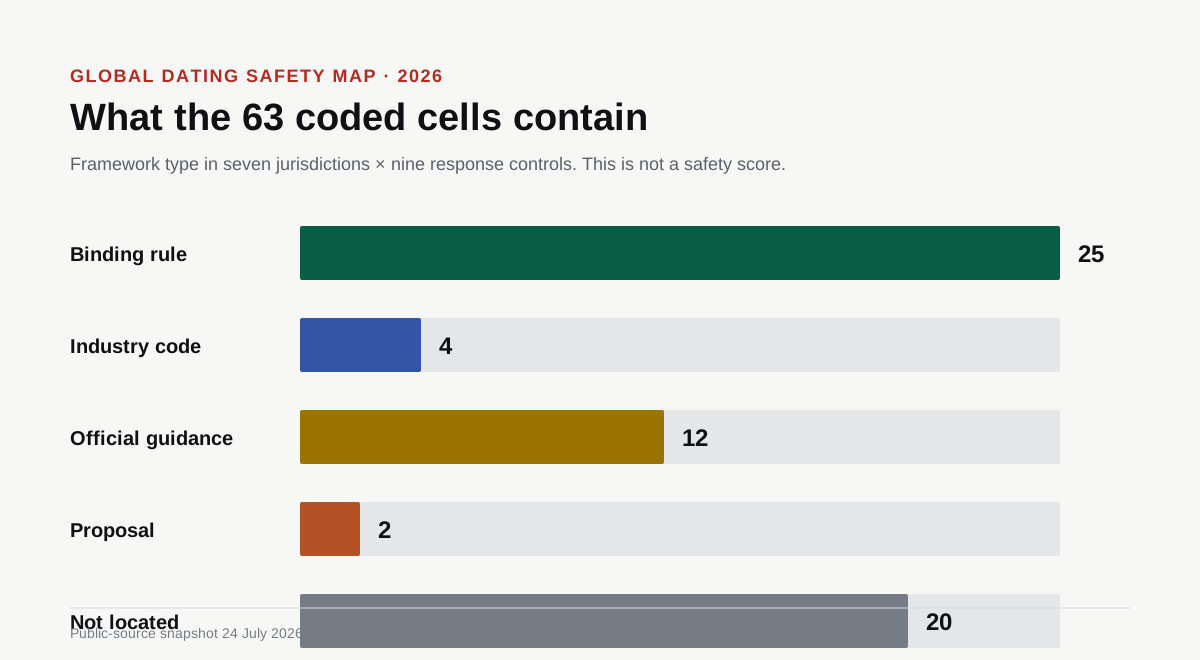
Jurisdiction control matrix
Where a user right is clear—and where it is not.
Every label links to a note below and every note names its official source. “Not located” means this review did not find a dating-specific requirement in the selected sources; it is not a claim that no relevant law exists.
| Jurisdiction | User reporting | Decision notice | Appeal | Banned-account notice | Cross-service action | Intimate-image response | Transparency | Preventive guidance | Age or identity controls |
|---|---|---|---|---|---|---|---|---|---|
| United States | Guidance | Proposed | Not located | Proposed | Not located | Binding | Not located | Guidance | Not located |
| United Kingdom | Binding | Binding | Binding | Not located | Not located | Binding | Binding | Guidance | Binding |
| EU / EEA | Binding | Binding | Binding | Not located | Not located | Binding | Binding | Guidance | Guidance |
| Australia | Code | Code | Code | Not located | Not located | Binding | Code | Guidance | Binding |
| Canada | Guidance | Not located | Not located | Not located | Not located | Guidance | Binding | Guidance | Not located |
| India | Binding | Binding | Binding | Not located | Not located | Binding | Binding | Guidance | Binding |
| Brazil | Binding | Binding | Not located | Not located | Not located | Binding | Binding | Guidance | Guidance |
On a phone, swipe the table horizontally. Select a label to open the source note for that country and control.
Country notes and official routes
The detail behind each matrix cell.
Reviewed jurisdiction
United States
Federal consumer-protection enforcement and reporting guidance are active. A dating-specific notification bill remains a proposal, while the TAKE IT DOWN Act creates a separate intimate-image removal framework for covered platforms.
- User reporting Guidance
-
The FTC provides a federal fraud-reporting route and dating-scam guidance; this is not a dating-platform complaint appeal.
- Decision notice Proposed
-
S.841 proposes notices connected to certain banned members. Congress.gov still lists the bill as introduced.
- Appeal Not located
-
No general dating-platform appeal right was located in the reviewed federal sources.
- Banned-account notice Proposed
-
The Romance Scam Prevention Act proposal would address notices after certain fraud-related account removals; it is not current law.
- Cross-service action Not located
-
No general cross-service dating-account action duty was located in the reviewed federal sources.
- Intimate-image response Binding
-
The TAKE IT DOWN Act establishes a notice-and-removal framework for covered non-consensual intimate depictions, including certain synthetic content.
- Transparency Not located
-
No dating-specific federal transparency-report duty was located in the reviewed source set.
- Preventive guidance Guidance
-
The FTC publishes dating and romance-scam warnings, complaint data, and reporting guidance.
- Age or identity controls Not located
-
No nationwide dating-specific age or identity-verification rule was located in this federal source set.
Reviewed jurisdiction
United Kingdom
The Online Safety Act places illegal-content risk, reporting, complaints, record-keeping, and age-assurance duties on in-scope services. Ofcom publishes dating-specific guidance on how those duties apply.
- User reporting Binding
-
In-scope services need a complaints tool for illegal or harmful material and a process for dealing with complaints.
Ofcom: Dating and social discovery: risks, rules and compliance Ofcom: Illegal content duties under the Online Safety Act
- Decision notice Binding
-
Complaints duties require clear processes and responses in defined circumstances; the exact duty depends on service and complaint type.
- Appeal Binding
-
The Act's complaints framework covers challenges to certain content and account decisions for in-scope services.
- Banned-account notice Not located
-
No dating-specific duty to warn a removed account's past matches was located in the reviewed Ofcom material.
Ofcom: Dating and social discovery: risks, rules and compliance
- Cross-service action Not located
-
No general duty to remove a person across separate dating products was located in the reviewed source set.
Ofcom: Dating and social discovery: risks, rules and compliance
- Intimate-image response Binding
-
Illegal-content duties cover relevant intimate-image abuse and sextortion risks on in-scope services.
Ofcom: Dating and social discovery: risks, rules and compliance Ofcom: Illegal content duties under the Online Safety Act
- Transparency Binding
-
In-scope services have record-keeping, terms, risk-assessment, and transparency duties that vary by service category.
- Preventive guidance Guidance
-
Ofcom publishes a dating-specific risk and compliance guide for services.
Ofcom: Dating and social discovery: risks, rules and compliance
- Age or identity controls Binding
-
Dating services that permit pornographic content must use highly effective age assurance to prevent under-18 access.
Ofcom: Dating and social discovery: risks, rules and compliance
Reviewed jurisdiction
European Union / EEA
The Digital Services Act creates a notice-and-action route, outcome notices, internal complaints, independent dispute settlement, and transparency duties for covered online platforms. It is not a dating-specific safety code.
- User reporting Binding
-
Online platforms must provide a simple notice-and-action mechanism for potentially illegal content.
European Commission: Fighting online scams with the DSA notice-and-action mechanism
- Decision notice Binding
-
A notifier must receive confirmation and the platform's final outcome.
European Commission: Fighting online scams with the DSA notice-and-action mechanism
- Appeal Binding
-
Users can use an internal complaint process or a certified out-of-court dispute body for covered decisions.
European Commission: Fighting online scams with the DSA notice-and-action mechanism
- Banned-account notice Not located
-
No dating-specific rule to notify a removed account's former matches was located in the reviewed DSA material.
European Commission: Fighting online scams with the DSA notice-and-action mechanism
- Cross-service action Not located
-
The reviewed DSA source does not create a general cross-product dating-account ban.
European Commission: Fighting online scams with the DSA notice-and-action mechanism
- Intimate-image response Binding
-
The notice-and-action process applies to potentially illegal content, including content illegal under applicable intimate-image laws.
European Commission: Fighting online scams with the DSA notice-and-action mechanism
- Transparency Binding
-
The DSA creates transparency obligations around moderation decisions, reports, advertising, and recommender systems.
European Commission: How the Digital Services Act brings transparency
- Preventive guidance Guidance
-
The Commission explains how to report scams and distinguish the DSA route from ordinary terms-of-service reporting.
European Commission: Fighting online scams with the DSA notice-and-action mechanism
- Age or identity controls Guidance
-
The DSA includes child-protection and design duties, but this review did not code a dating-specific identity-verification requirement.
European Commission: How the Digital Services Act brings transparency
Reviewed jurisdiction
Australia
Australia combines eSafety reporting powers and preventive guidance with a dating-specific voluntary industry code. The code has independent industry oversight, but eSafety states that it does not enforce the code.
- User reporting Code
-
Code participants must maintain reporting systems; separate eSafety routes cover eligible serious online harms.
eSafety Commissioner: Online dating Australia Online Dating Code of Conduct: Voluntary Online Dating Code
- Decision notice Code
-
The code sets complaint and accountability expectations, but it is not equivalent to a statutory outcome-notice right.
Australia Online Dating Code of Conduct: Voluntary Online Dating Code
- Appeal Code
-
Potential code breaches can be raised with the independent Code Compliance Committee.
eSafety Commissioner: Online dating Australia Online Dating Code of Conduct: Voluntary Online Dating Code
- Banned-account notice Not located
-
No universal past-match notification duty was coded from the reviewed public code summary.
Australia Online Dating Code of Conduct: Voluntary Online Dating Code
- Cross-service action Not located
-
No universal cross-product removal duty was coded from the reviewed public code summary.
Australia Online Dating Code of Conduct: Voluntary Online Dating Code
- Intimate-image response Binding
-
eSafety provides a statutory reporting route for image-based abuse and other eligible online harms.
- Transparency Code
-
Code participants publish self-assessed compliance ratings and are accountable to an industry-formed committee.
eSafety Commissioner: Online dating Australia Online Dating Code of Conduct: Voluntary Online Dating Code
- Preventive guidance Guidance
-
eSafety publishes detailed advice for choosing a service, chatting, meeting, reporting, and getting support.
- Age or identity controls Binding
-
Separate online-safety standards and child-protection duties apply; the voluntary dating code also addresses platform safeguards.
Reviewed jurisdiction
Canada
Canada's current reviewed sources are mainly consumer-protection and privacy frameworks rather than a dating-specific online-safety regime. The proposed Online Harms Act is kept separate from rules already in force.
- User reporting Guidance
-
Official consumer guidance points users toward complaint and fraud-reporting routes; no dating-specific platform mechanism is mandated in this source.
Competition Bureau Canada: Online dating — know what you're signing up for
- Decision notice Not located
-
No general dating-platform moderation outcome-notice right was located in the reviewed current sources.
Office of the Privacy Commissioner of Canada: PIPEDA investigation into a dating website
- Appeal Not located
-
Privacy complaints have regulator routes, but that is not a general appeal from dating-app moderation.
Office of the Privacy Commissioner of Canada: PIPEDA investigation into a dating website
- Banned-account notice Not located
-
No dating-specific past-match warning duty was located in the reviewed source set.
Competition Bureau Canada: Online dating — know what you're signing up for
- Cross-service action Not located
-
No general cross-service dating-account action duty was located.
Competition Bureau Canada: Online dating — know what you're signing up for
- Intimate-image response Guidance
-
Criminal and provincial routes may apply, but the reviewed federal online-harms proposal is not coded as current law.
- Transparency Binding
-
PIPEDA privacy accountability and meaningful-consent duties can apply to dating services; this is not a public safety-report requirement.
Office of the Privacy Commissioner of Canada: PIPEDA investigation into a dating website
- Preventive guidance Guidance
-
The Competition Bureau publishes dating-subscription, identity, and consumer-protection advice.
Competition Bureau Canada: Online dating — know what you're signing up for
- Age or identity controls Not located
-
No nationwide dating-specific verification rule was located in the reviewed source set.
Office of the Privacy Commissioner of Canada: PIPEDA investigation into a dating website
Reviewed jurisdiction
India
India's intermediary, grievance, cybercrime-reporting, and data-protection rules can apply to dating services, but the reviewed national sources do not form a dating-specific safety code.
- User reporting Binding
-
Intermediaries must publish grievance contacts and processes; the national cybercrime portal is a separate government reporting route.
Ministry of Electronics and Information Technology: Information Technology Rules and amendments Indian Cyber Crime Coordination Centre: National Cyber Crime Reporting Portal
- Decision notice Binding
-
The grievance framework sets acknowledgement and resolution duties, subject to service classification and complaint type.
Ministry of Electronics and Information Technology: Information Technology Rules and amendments
- Appeal Binding
-
The IT Rules provide a Grievance Appellate Committee route for covered intermediary grievances.
Ministry of Electronics and Information Technology: Information Technology Rules and amendments
- Banned-account notice Not located
-
No dating-specific duty to warn a removed account's past contacts was located.
Ministry of Electronics and Information Technology: Information Technology Rules and amendments
- Cross-service action Not located
-
No general cross-product dating-account removal duty was located.
Ministry of Electronics and Information Technology: Information Technology Rules and amendments
- Intimate-image response Binding
-
The intermediary grievance framework includes accelerated handling for certain intimate or impersonation content; criminal reports use the cybercrime portal.
Ministry of Electronics and Information Technology: Information Technology Rules and amendments Indian Cyber Crime Coordination Centre: National Cyber Crime Reporting Portal
- Transparency Binding
-
Covered intermediaries and data fiduciaries have notice, grievance, and reporting duties that vary by classification.
Ministry of Electronics and Information Technology: Information Technology Rules and amendments Ministry of Electronics and Information Technology: Digital Personal Data Protection Rules, 2025
- Preventive guidance Guidance
-
Government cybercrime resources provide reporting and prevention information, though not a complete dating-specific guide.
Indian Cyber Crime Coordination Centre: National Cyber Crime Reporting Portal
- Age or identity controls Binding
-
The DPDP framework includes rules for children's personal data; it does not make a dating badge proof of identity or safety.
Ministry of Electronics and Information Technology: Digital Personal Data Protection Rules, 2025
Reviewed jurisdiction
Brazil
Brazil's 2026 platform framework gives the ANPD systemic oversight of provider reporting channels, risk prevention, transparency, digital fraud, and digital violence. Implementation is still being phased in.
- User reporting Binding
-
The 2026 framework addresses provider reporting channels and handling systems; ANPD oversight is systemic rather than a substitute for every content complaint.
- Decision notice Binding
-
Provider duties include complaint handling and user rights, while detailed implementation is still developing.
- Appeal Not located
-
No dating-specific moderation appeal was coded from the reviewed implementation page.
- Banned-account notice Not located
-
No dating-specific duty to notify past contacts of a banned account was located.
- Cross-service action Not located
-
No general cross-service dating-account removal rule was located.
- Intimate-image response Binding
-
The 2026 framework specifically addresses digital violence and intimate content, including manipulated intimate content.
Ministry of Justice and Public Security: Rules protecting women online and addressing digital violence Autoridade Nacional de Proteção de Dados: Marco Civil da Internet — 2026 platform duties and implementation
- Transparency Binding
-
ANPD oversight covers governance, transparency, risk prevention, reporting channels, and systemic provider duties.
- Preventive guidance Guidance
-
Official implementation material explains provider duties and digital-violence protections; it is not a dating-specific user guide.
Autoridade Nacional de Proteção de Dados: Marco Civil da Internet — 2026 platform duties and implementation Ministry of Justice and Public Security: Rules protecting women online and addressing digital violence
- Age or identity controls Guidance
-
Child and adolescent online protections exist in related frameworks; no dating-specific identity check was coded here.
Official product sources under review
What these public pages cover—and what they leave unclear.
This table records whether a captured public source directly addresses a topic. It does not test the product, measure incidents, verify enforcement, or rank one app as safer than another. A topic marked “not coded” may be addressed elsewhere.
RealAttraction.today received no payment, affiliate commission, or other consideration for inclusion. No dating product reviewed this analysis before publication or influenced the coding. Inclusion is not an endorsement, and omission is not a criticism.
Product links go to the specific public safety or help page reviewed so readers can check the coding. They are citations, not sign-up or recommendation links. The report does not use product logos, prices, or download calls to action.
Why these twelve sources were selected
The set combines mainstream products with representative services serving distinct dating contexts, including LGBTQ+, faith and marriage, non-traditional relationships, and explicit relationship expectations. A product needed an accessible public safety or help page that could be coded under the same topic definitions. This is a selected source set, not a complete market census.
| Product and source | Report or support | Moving off-app | Money or investment | Privacy and personal data | First meeting | Verification or identity checks | Intimate images or consent | Location or device exposure | Community or relationship context |
|---|---|---|---|---|---|---|---|---|---|
| Tinder Mainstream dating Official source reviewed | Mentioned | Mentioned | Not coded from this source | Mentioned | Mentioned | Mentioned | Mentioned | Mentioned | Not coded from this source |
| Bumble Mainstream dating and social connection Official source reviewed | Mentioned | Not coded from this source | Not coded from this source | Mentioned | Mentioned | Mentioned | Mentioned | Not coded from this source | Not coded from this source |
| Hinge Relationship-focused dating Official source reviewed | Mentioned | Mentioned | Mentioned | Mentioned | Mentioned | Mentioned | Mentioned | Not coded from this source | Not coded from this source |
| Match Relationship-focused dating Official source reviewed | Mentioned | Mentioned | Mentioned | Mentioned | Mentioned | Mentioned | Not coded from this source | Not coded from this source | Not coded from this source |
| Coffee Meets Bagel Relationship-focused dating Official source reviewed | Mentioned | Mentioned | Mentioned | Mentioned | Mentioned | Not coded from this source | Not coded from this source | Not coded from this source | Not coded from this source |
| Grindr LGBTQ+ dating and connection Official source reviewed | Mentioned | Mentioned | Mentioned | Mentioned | Mentioned | Mentioned | Mentioned | Mentioned | Mentioned |
| Muzz Muslim dating and marriage Official source reviewed | Mentioned | Mentioned | Mentioned | Mentioned | Mentioned | Not coded from this source | Not coded from this source | Not coded from this source | Mentioned |
| Shaadi.com South Asian matrimony Official source reviewed | Mentioned | Not coded from this source | Mentioned | Mentioned | Mentioned | Mentioned | Not coded from this source | Not coded from this source | Mentioned |
| Feeld Open-minded and non-traditional relationships Official source reviewed | Mentioned | Not coded from this source | Mentioned | Mentioned | Not coded from this source | Mentioned | Mentioned | Not coded from this source | Mentioned |
| Salams Muslim dating and marriage Official source reviewed | Mentioned | Not coded from this source | Mentioned | Mentioned | Mentioned | Mentioned | Not coded from this source | Not coded from this source | Mentioned |
| Seeking Dating with explicit relationship expectations Official source reviewed | Mentioned | Mentioned | Mentioned | Mentioned | Mentioned | Mentioned | Mentioned | Not coded from this source | Mentioned |
| eharmony Relationship-focused dating Official source reviewed | Mentioned | Mentioned | Mentioned | Mentioned | Mentioned | Not coded from this source | Mentioned | Not coded from this source | Mentioned |
Tinder · Mainstream dating
The current public page covers in-app communication, personal details, meeting plans, reporting, verification features, consent, and orientation privacy in some regions.
Official source reviewed: Safety Tips · checked 2026-07-24Bumble · Mainstream dating and social connection
The Safety Center presents reporting, identity, private-image, in-app calling, and date-sharing tools. It describes features, not proof that a person is safe.
Official source reviewed: Bumble Safety Center · checked 2026-07-24Hinge · Relationship-focused dating
The guide emphasizes staying in control of communication, refusing financial requests, protecting details, reporting, planning the first meeting, and consent.
Official source reviewed: Safe Dating Advice · checked 2026-07-24Match · Relationship-focused dating
The source covers profile caution, off-app communication, money, personal information, reporting, and independent first-meeting plans.
Official source reviewed: Dating Safety Tips · checked 2026-07-24Coffee Meets Bagel · Relationship-focused dating
The public advice focuses on keeping contact manageable, avoiding financial requests, protecting personal information, meeting publicly, and reporting concerns.
Official source reviewed: Dating Safety Tips · checked 2026-07-24Grindr · LGBTQ+ dating and connection
The source set adds location, device, outing, sexual-health, consent, and identity-context risks that broad first-date advice can miss.
Official source reviewed: Safety & Privacy resources · checked 2026-07-24Muzz · Muslim dating and marriage
The source covers reporting, staying on-app, privacy, money, public meeting plans, independent transport, and halal meeting context.
Official source reviewed: Safety Guidelines · checked 2026-07-24Shaadi.com · South Asian matrimony
The public guidance addresses matrimony-specific identity, family, financial, privacy, meeting, and reporting decisions.
Official source reviewed: Privacy and safety tips · checked 2026-07-24Feeld · Open-minded and non-traditional relationships
The page links fraud and sextortion guidance and presents privacy, verification, unwanted-image controls, consent, boundaries, and inclusive relationship contexts.
Official source reviewed: Trust & Safety · checked 2026-07-24Salams · Muslim dating and marriage
The source covers personal information, meeting, financial boundaries, reporting, verification, and faith- and marriage-aware context.
Official source reviewed: Safety · checked 2026-07-24Seeking · Dating with explicit relationship expectations
The source directly addresses money, coercion, privacy, verification, first meetings, consent, and clear relationship expectations.
Official source reviewed: Dating Safely · checked 2026-07-24eharmony · Relationship-focused dating
The guide covers in-app communication, personal and financial information, reporting, first meetings, consent, boundaries, and relationship-focused context.
Official source reviewed: Online Dating Safety · checked 2026-07-24Official source → public guide → private Check
How the research changes a decision before it becomes hard to undo.
The Check does not ask a user to diagnose a crime or upload evidence. It translates recurring public guidance into questions a person can answer privately on their own device.
Someone asks you to leave the app quickly
- Official layer
- Regulators and consumer agencies repeatedly treat loss of platform controls and evidence as a practical risk.
- Product layer
- Several reviewed platform guides advise slowing down before moving to text, WhatsApp, Telegram, email, or another service.
- Check layer
- The Check asks whether the move is urgent, secret, or tied to pressure—not whether one app is always safe.
Someone asks for money, crypto, gift cards, or an investment
- Official layer
- Official fraud guidance gives this a separate reporting and recovery context.
- Product layer
- Money requests appear across mainstream, relationship-focused, community-specific, and matrimony guidance.
- Check layer
- The Check separates the request, urgency, payment method, and ability to pause before anything is sent.
Someone asks for a private image or identity detail
- Official layer
- Several jurisdictions provide distinct routes for intimate-image abuse, impersonation, privacy, or cybercrime.
- Product layer
- Consent, privacy, device exposure, and reporting are unevenly covered across products.
- Check layer
- The Check never asks for the image or document. It asks what was requested and points to the relevant response route.
A first meeting is being arranged
- Official layer
- Preventive guidance stresses an independent venue, transport, communication plan, and exit route.
- Product layer
- First-meeting planning is one of the most repeated public guidance topics.
- Check layer
- The Check focuses on venue, cost, transport, pressure, privacy, and whether the plan can be changed without conflict.
A profile has a badge, ID check, or video call
- Official layer
- Age, identity, privacy, and child-protection duties differ by jurisdiction and do not create one universal proof standard.
- Product layer
- Products describe different checks; the public pages do not support treating every badge as proof of honesty or future behaviour.
- Check layer
- The Check treats verification as one narrow signal and asks what the situation still requires you to decide.
Method and limits
A reproducible public-source monitor, not a legal opinion.
- Jurisdiction selection. The first edition covers large English-language dating markets plus the EU/EEA and Brazil, where platform rules and enforcement structures add materially different models.
- Official sources first. A legal or regulatory cell is coded only from a government, regulator, legislature, or formally published code source.
- AI-assisted source processing. AI tools helped organise source material, compare repeated fields, and prepare draft summaries. Published entries remain tied to the linked public source. AI output is not treated as evidence, a legal interpretation, or an independent source. This map has not been reviewed by a lawyer.
- Strongest supported status. Each cell uses the strongest status supported by the linked source: binding rule, industry code, official guidance, proposal, or not located.
- No silent inference. A general online-platform duty is not rewritten as a dating-specific promise. A bill is never presented as law. A voluntary code is not presented as government enforcement.
- Product-source selection. The set combines mainstream products with representative services serving distinct dating contexts, including LGBTQ+, faith and marriage, non-traditional relationships, and explicit relationship expectations. A product needed an accessible public safety or help page that could be coded under the same topic definitions. This is a selected source set, not a complete market census.
- Editorial independence. RealAttraction.today received no payment, affiliate commission, or other consideration for inclusion. No dating product reviewed this analysis before publication or influenced the coding. Inclusion is not an endorsement, and omission is not a criticism. Product links go to the specific public safety or help page reviewed so readers can check the coding. They are citations, not sign-up or recommendation links. The report does not use product logos, prices, or download calls to action.
- Product pages are a separate layer. The twelve-product table records topics in captured official guidance, not product performance, enforcement quality, or incident rates.
- Snapshot, not permanence. Public pages, legislation, and implementation guidance change. Every source has a last-checked date and material changes enter the log below.
- Corrections. Send a changed source, factual correction, or scope question to hello@realattraction.today. We publish the source and correction date with material revisions.
Reuse: The original coding, tables, chart, and explanatory text are available under Creative Commons Attribution 4.0 International. Third-party source text, names, and marks remain subject to their own terms.
Boundary: This report does not identify users, investigate allegations, collect evidence, rank products by safety, or tell a reader whether a legal duty applies to a specific case.
For journalists and researchers
Cite the edition and the underlying source.
RealAttraction Research. Global Dating Safety Rules & Response Map 2026. First edition, public-source snapshot 24 July 2026. https://realattraction.today/insights/global-dating-safety-rules-response-map/
Change log
What changed and when.
- Published the product-source selection method and limits.
- Added a no-payment, no-affiliate, no-pre-publication-review, and no-coding-influence disclosure.
- Relabelled product links as official sources reviewed rather than recommendation links.
- Clarified that inclusion and omission are not safety judgments.
- Published the first seven-jurisdiction control map.
- Added a twelve-product public-guidance comparison.
- Separated binding rules, industry codes, official guidance, proposals, and items not located.
- Added machine-readable JSON and CSV distributions, an SVG chart, a PDF edition, and citation wording.
- Published an AI-use disclosure covering source organisation, drafting, evidence limits, and legal-review limits.